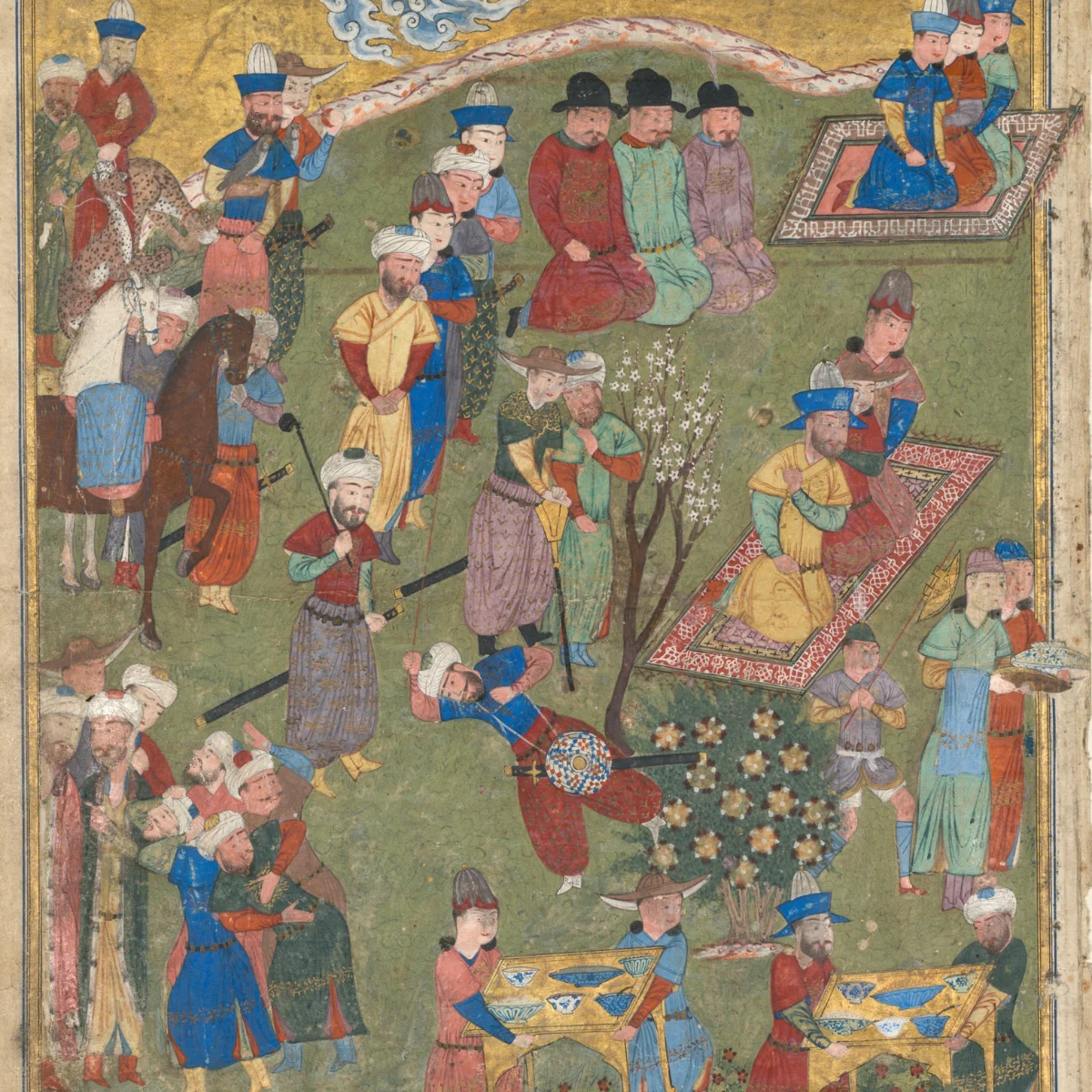
Buying art or handmade products from Iran online sounds simple. Search for Iranian handicrafts, find something you like, pay for it and wait for the package.
In reality, the difficult part usually comes before the purchase: finding out who made the product, where it was made, what “handmade” actually means, and whether the seller can realistically get it to you.
That matters because “Iranian art” is not one market. A contemporary painting, a handmade piece of jewelry, a ceramic cup, a woven textile, a photograph and a traditional craft may all appear in the same search results while belonging to completely different businesses and production systems.
So the useful question is not simply where can I buy Iranian art? It is also what kind of seller should I buy from?
In this article
- Iranian art is not one market
- Where can you buy Iranian art online?
- What does “handmade” actually mean?
- Why the maker matters
- The difficult part may be getting the product to you
- Instagram can show the product, but it is not the whole shop
- What about Etsy?
- What should you check before buying?
- The same problem looks different from the maker’s side
- Why price is more complicated than it looks
- Iranian products are more than traditional handicrafts
- The bigger question
Iranian art is not one market
The phrase “Iranian art” sounds specific, but it really isn’t.
It can mean contemporary painting, photography, sculpture, calligraphy, ceramics, jewelry, textiles, clothing, home objects or traditional crafts such as Khatamkari and Minakari.
These products can have completely different makers, production methods, prices and customers.
Iran also has a remarkably broad craft tradition. Isfahan, for example, is recognized by UNESCO as a Creative City of Crafts and Folk Art, with traditions that include carpet weaving, metalwork, ceramics, woodwork and inlay.
For an international buyer, this diversity is both the attraction and the problem. Searching for “Iranian handicrafts” can give you hundreds of results, but the label alone doesn’t tell you much about the person behind the product.
Who made it? How was it made? Where was it produced? And is the person selling it actually the person who made it?
Where can you buy Iranian art online?
There is no single best place to buy Iranian art and handmade products. The right choice depends on what you are looking for.
Independent maker marketplaces
If your main interest is discovering contemporary independent creators, a marketplace can be more useful than a traditional handicraft store.
The international Maqaze shop brings together products from independent Iranian artists and makers, with categories including ceramics and pottery, jewelry, painting, photography, calligraphy, drawing, textiles and clothing.
This kind of marketplace does something that a conventional store often cannot: it gives smaller producers a place to be discovered.
You may find a ceramicist working on a small scale, a jewelry maker producing limited pieces, a photographer selling prints, or a designer developing a contemporary product rather than reproducing a traditional object.
Specialized handicraft stores
If you already know what kind of traditional Iranian craft you want, a specialized store may be easier to navigate.
These stores usually organize products around established craft categories and can be useful when the technique or tradition matters more to you than discovering an individual contemporary maker.
Online galleries and art platforms
If you are looking for painting, sculpture, photography or other contemporary artwork, you are dealing with a different market.
In that case, an online gallery or art platform is generally more appropriate than a general handicraft marketplace.
The important distinction is whether you are looking for an artwork, a craft, or simply a well-made object by an independent creator.
Looking for Iranian products?
If you want to explore products made and sold within Iran, you can also visit the Persian version of Maqaze.
What does “handmade” actually mean?
“Handmade” sounds like a clear description, but it isn’t.
Two products can both be called handmade while being produced in very different ways.
One may be made individually by a person in a small studio. Another may come from a larger workshop where machines handle much of the process and people concentrate on finishing and assembly.
Neither model is automatically wrong. The problem is when the description hides the difference.
If the production method matters to you, look for information about:
- the maker or workshop
- the place where the product was made
- the materials used
- the production process
- whether the product is unique or made in batches
- whether the seller is the maker, a retailer or an exporter
Why the maker matters
Iranian products are often marketed through words such as “Persian,” “ancient,” “traditional” and “authentic.”
The history behind many Iranian crafts is real and important. But history alone doesn’t make a product good.
A mediocre object can be wrapped in a beautiful cultural story. A genuinely interesting contemporary product may have almost no connection to the usual image of Persian art.
That is why knowing the maker can be more useful than knowing the mythology around the product.
The difficult part may be getting the product to you
For an international buyer, discovering an Iranian product is only the beginning.
Payment, shipping, customs, returns and delivery times can become part of the buying decision.
This is particularly important when a product is shipped directly from Iran. International transactions involving Iran can be affected by financial and trade restrictions, so the fact that a seller lists a product online does not necessarily mean that delivery to every country will be equally straightforward.
Before purchasing, check the actual destination, payment method, shipping method, estimated delivery time and whether customs or import charges are the buyer’s responsibility.
A beautiful object that cannot reliably reach its customer is not, from a business point of view, a successful online product.
Have a question before buying?
For questions about products, artists, orders or international support, you can contact Maqaze.
Instagram can show the product, but it is not the whole shop
Social media has changed the situation for independent Iranian creators.
A maker can now show their work to thousands of people without having a physical store. That is valuable.
But attention and commerce are not the same thing.
An account can have beautiful photography, thousands of followers and strong engagement while still making it difficult to buy anything.
An international customer needs practical answers:
- How much does it cost?
- How can I pay?
- Where does it ship from?
- How long does delivery take?
- What happens if the package arrives damaged?
- Can I return it?
- Who do I contact if something goes wrong?
None of these questions are about artistic quality. But any one of them can decide whether the sale happens.
What about Etsy?
Etsy is an obvious place to search for Iranian handicrafts and Persian-inspired products.
But a search result for “Iranian handicraft” does not necessarily mean that the product was made in Iran or that the seller is based there.
This is a general problem with marketplace search. A keyword tells you what a product is associated with. It does not necessarily tell you where the product was produced.
If the origin matters to you, check the seller’s location and shipping origin rather than relying only on the product title.
What should you check before buying?
The best online purchase is not necessarily the cheapest one or the product with the most impressive photographs.
Look for information that lets you understand the transaction before you make it.
- Who made the product?
- Where was it produced?
- What materials were used?
- Is it one-of-a-kind or part of a batch?
- Where will it ship from?
- How long is delivery expected to take?
- What happens if the product is damaged?
If a product is described as handmade but there is no information about how it is produced, that is worth noticing.
If a seller says they represent independent Iranian makers, it is also reasonable to ask whether they work directly with producers or simply resell products.
These are not accusations. They are ordinary questions a buyer should be able to answer before spending money.
The same problem looks different from the maker’s side
For an Iranian producer, the useful question is not “How do I make foreigners like Iranian products?”
Sometimes the answer is price.
Sometimes the photographs are weak. Sometimes the description is unclear. Sometimes the product is difficult to distinguish from dozens of similar products.
Sometimes the audience is large but poorly matched to the product.
And sometimes the product simply doesn’t have enough demand outside its existing market.
That last possibility is uncomfortable, but it matters.
Not every handmade product becomes an export product simply because it is handmade or Iranian.
International customers do not owe a product demand because it carries cultural meaning. The product still needs to give them a reason to buy it: beauty, usefulness, gifting, collecting, curiosity, identity or some combination of these.
Why price is more complicated than it looks
Pricing becomes particularly difficult when an Iranian maker tries to sell internationally.
The producer thinks about materials, labor and production costs in Iran.
The customer sees a final price in dollars or euros.
Between those two numbers are packaging, shipping, payment costs, platform fees, currency conversion, possible customs charges and customer service.
That means a product that looks expensive to the maker may actually be reasonably priced for an international customer. The opposite can happen too.
This is why “cheap Iranian crafts” is not necessarily a good international strategy.
Low prices may attract attention, but handmade production still takes time. Selling more products at an unsustainable margin can simply mean doing more work without building a healthier business.
Iranian products are more than traditional handicrafts
International buyers often encounter Iran through a relatively narrow set of products: Persian carpets, miniature painting, traditional textiles and familiar handicrafts.
Those traditions matter. But they are only one part of what independent creators in Iran are making today.
There are contemporary designers, photographers, illustrators, ceramicists, jewelry makers, fashion designers, small brands, students and home-based producers creating products that may have little connection to the conventional image of “Persian handicrafts.”
That distinction is important.
An international customer isn’t always looking for an artifact from the past. Sometimes they simply want something well designed and made by an interesting person who happens to live and work in Iran.
That is a different proposition.
The bigger question
The interesting part of buying Iranian art online isn’t really finding a shopping directory.
The bigger problem is the distance between the person who can make something and the person who might want to buy it.
Iran has independent producers working from studios, workshops, apartments and homes. What many of them need is not another lesson in creativity. They need access to customers, payment infrastructure, logistics, professional presentation and markets beyond their immediate geography.
That is why the future of independent craft commerce won’t be decided simply by who makes the most beautiful products.
It will depend on who can connect three things that have traditionally been separated:
The customer.
And the infrastructure between them.
For buyers, that changes what buying Iranian art can mean.
It doesn’t have to mean buying an object that represents an ancient culture.
It can mean buying something made by a person working today, with their own taste, skills, limitations and ambitions.
The most interesting Iranian products may not be the ones that look the most traditionally Iranian.
They may simply be the ones where you can see the person behind the product.
“`

User comments